Ask Mariah: Corn Sweat
Thursday, August 6, 2026

By: Mariah Roberts
All you have to do is step outside this time of year to be wrapped in a sticky, muggy blanket of humidity. Someone is bound to mention: “It’s the corn sweat.”
I’ve been hearing questions and comments on the topic, so I figured I’d share the truth about corn sweat with some fellow Midwesterners. Plus, how it affects our watershed!
The short answer is yes, corn sweats and increases humidity, but the long answer is a bit more complicated—countless factors influence local humidity levels.

The numbers
According to the University of Illinois Extension, corn can release up to 4,000 gallons of water vapor per acre per day. For context, a standard 15-foot round above-ground pool holds about 4,000 gallons of water.
The Upper Tippecanoe River Watershed has an estimated 40,000 acres of corn growing in it—which adds up to roughly 160,000,000 gallons of water released into our air every single day. Now that’s about 242 Olympic-sized swimming pools—wow!

Those staggering numbers make it easy to pin the clammy feeling entirely on the cornfields. But there’s more to the story.
What is corn sweat?
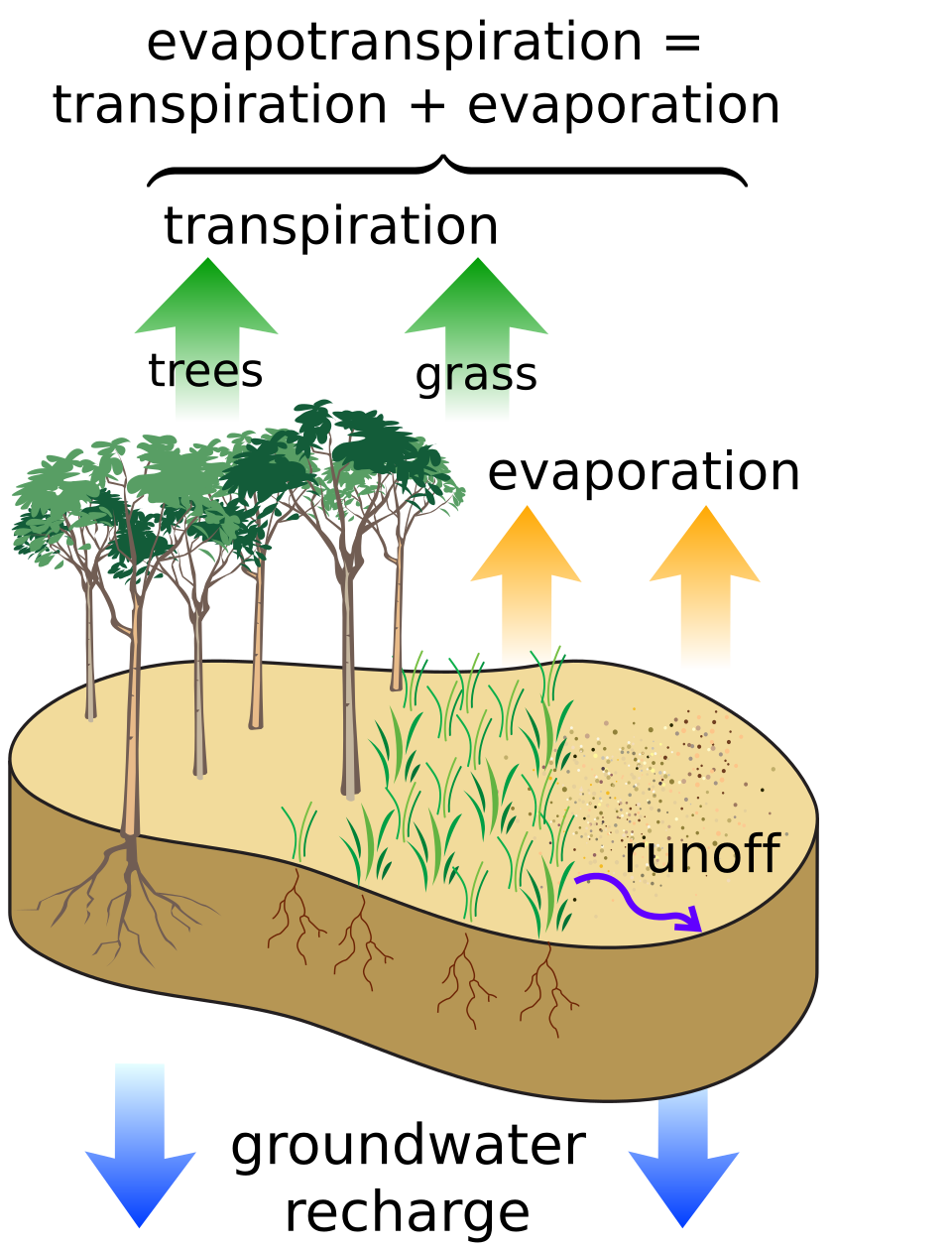
Evapotranspiration is the official, scientific term. The word is a mashup of evaporation and transpiration. It represents a two-part process that creates water vapor.
Evaporation is the process by which water dries from the soil and transitions into gas.
Transpiration is the release of water vapor from the leaves.
Over 90% of the water that corn sucks up from its roots is released as water vapor through its leaves. The rest is what’s used for essential chemical processes like photosynthesis.
Why does corn sweat?
It sounds wasteful, doesn’t it, to sweat out nearly all the water you consume? There’s a completely valid reason: the same reason you sweat on a hot day—it’s a cooling system!
Water evaporating off the leaf surface pulls heat with it, which matters a lot if you’re a stalk of corn standing in an open field with no escape from the sun.
That evaporative cooling is also doing double duty: it transports minerals up from the soil, moves sugars around the plant, and keeps the whole thing from wilting.
One process, several functions.
Can we really blame one crop?
Not exactly. Every plant transpires—some far more than corn does. A single mature tree can sweat about 100 gallons of water a day. A single corn plant, by comparison, transpires roughly a dozen gallons across its entire growing season.
While trees are the bigger sweaters, corn takes the blame because of sheer scale: 40,000 acres of it just in our watershed, all transpiring together. That adds up fast!
Weather patterns play their part too. Southerly and westerly winds carry in moisture from elsewhere, layering onto whatever the local crops are releasing. Transpiration itself picks up in hot, dry, windy conditions, so a muggy stretch is really a mix of local plant activity and moisture blowing in from somewhere else—not corn acting alone.
And transpiration isn’t optional for a plant. It occurs during the essential gas exchange of photosynthesis: oxygen is released, and carbon dioxide enters.
The big picture
Corn contributes plenty of water vapor to the air, but so would a forest or prairie in its place—transpiration is just part of how plants work. The bigger factor is how land is managed. Practices that support infiltration help water soak into the ground instead of rushing off the field, which replenishes the water table, lets plant roots reach moisture during dry spells, and cuts down on both irrigation needs and surface evaporation. A cover on the soil—whether a cover crop or crop residue—adds to this by limiting direct evaporation and keeping moisture where it’s useful, feeding plants and groundwater instead of disappearing into the air.
Corn sweat is real, but it’s not the villain of Midwest summer. It’s one piece in a large puzzle.
The good news is that the same practices that ease evapotranspiration—cover crops, reduced tillage, better infiltration—also keep sediment and nutrients out of our waterways. When water infiltrates instead of running off, it’s a win-win: healthier soil, healthier crops, healthier water.
So next time someone blames the corn for their bad hair day, maybe slip in a word about why healthy soil matters more than they think!